
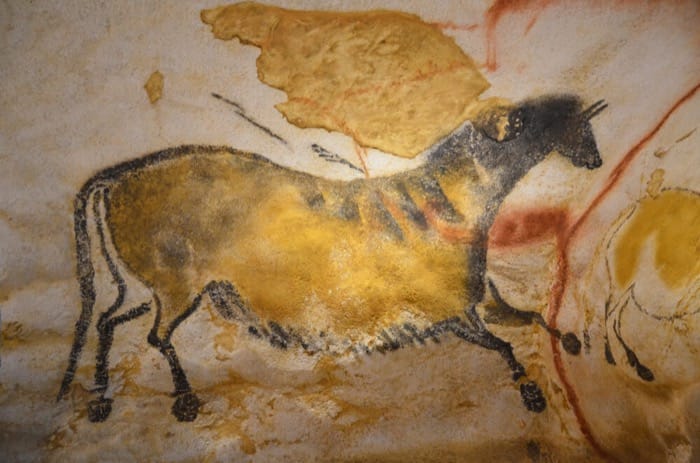
On September 12, 1940, eighteen-year-old Marcel Ravidat chased his dog into a hole near Montignac, France — and what he found on the other side would turn out to be one of the most remarkable archaeological discoveries ever made. What awaited him was nothing short of an ancient museum: the Lascaux Cave Paintings, a breathtaking storyboard of fantastical renderings that offered a direct window into the lives of our earliest ancestors.
It all started when Marcel's dog, Robot, stumbled upon a cave entrance. At first, Marcel suspected it might be a secret passageway leading to a nearby castle. Intrigued, he quickly gathered three of his friends, and together the group ventured inside. What they encountered was an extraordinary treasure trove — a testament to the creativity and expressive impulse of early humans. The boys were, in essence, gazing upon some of the oldest and finest artwork ever discovered, created during the upper paleolithic era roughly 17,000 years ago.
On September 21st, the boys returned to the site, this time accompanied by archaeologist Henri Breuil. They guided him through the immense cave structure, and he quickly confirmed just how significant the discovery was. As Henri examined the grand, decorated walls, the Lascaux cave system came alive once more, revealing around 600 animal depictions and about 1,500 engravings.
The more Henri and his companions documented the cave's imagery, the clearer it became that these ancient people were far more sophisticated than one might assume. Both Henri and later archaeologists identified signs pointing to religious worship and even a belief in magic.
The Lascaux cave system welcomed its first public visitors in 1948, but by 1963, authorities were forced to close it due to degradation issues. A replica has since been constructed, though, and it continues to draw thousands of visitors each year.