
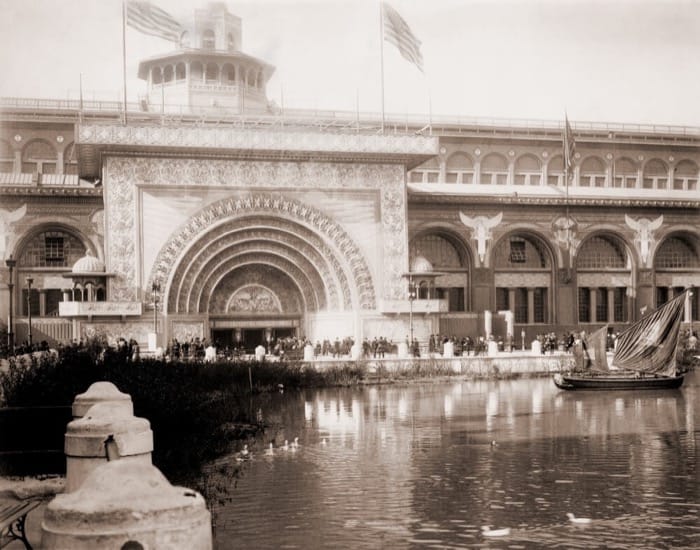
An American architect widely celebrated as the spiritual father of modern American architecture, Louis Sullivan — whose full name was Louis Henry Sullivan — became closely linked with the aesthetic vision behind early skyscraper design.
Born on September 3, 1856, in Boston, Massachusetts, Sullivan's life came to an end on April 14, 1924, in Chicago, Illinois. His prolific partnership with Dankmar Adler (1879–95) produced more than 100 works, among them the Auditorium Building in Chicago (1887–89), the Wainwright Building in St. Louis, Missouri (1890–91), and the Guaranty Building in Buffalo, New York (1894–95; now Prudential Building).
Frank Lloyd Wright spent six years apprenticing under Sullivan at the firm. After striking out on his own beginning in 1895, Sullivan created the Schlesinger & Mayer department store (1898–1904; now the Sullivan Center) in Chicago. His autobiography appeared shortly before he passed away.
A champion of architectural reform and a vocal critic of historical eclecticism, Sullivan played a pivotal role in reshaping how people perceived the architect — as a creative personality rather than a mere technician. His designs stand out for their ornateness. The lasting significance of Sullivan lies in both his built works and his written output. Subjective and figurative in nature, these writings point toward architectural directions rather than laying out specific ideologies or programs. Sullivan held that mechanical theories of art posed a real danger.
The intellectual roots of Sullivan's perspective reach back to mid-nineteenth-century thinkers: two Americans — sculptor Horatio Greenough and philosopher Ralph Waldo Emerson — along with the English naturalist Charles Darwin. Darwin's ideas on evolution, especially regarding organic growth, left a deep imprint on European architects and, through that influence, shaped Sullivan's own thinking.