
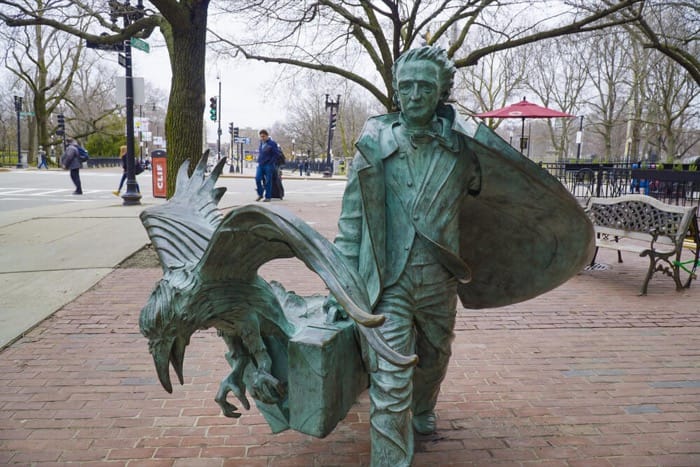
Among the most celebrated writers in American literary history, Poe was discovered on October 3, 1849, by Joseph W. Walker at Ryan's Fourth Ward Polls. Walker described him as being in "great distress, and in need of immediate assistance." Evidence from a letter Poe had written to a poet named Mrs. St. Leon indicates he had been heading to Philadelphia with plans to edit her poetry book.
Unable to speak coherently, Poe offered no explanation for the unfamiliar clothes he was wearing. Equally baffling was his inability to account for whatever had reduced him to such a dire state. He managed to call out for Joseph Snodgrass, an acquaintance and editor, who arrived but was unsuccessful in persuading Poe's relatives to take responsibility for the gravely ill writer.
With no other options available, Snodgrass arranged for Poe to be brought to the Washington Medical College. Once there, Poe proved unable to tell his attending physician, John Moran, where he had left his belongings. His cousin would later track down one of his trunks in Baltimore, while the second turned up in Richmond.
On October 7, 1849, Poe passed away in hospital, and to this day, the true cause of his death remains shrouded in mystery. Among the theories put forward is cooping — a form of electoral fraud where victims were drugged and then coerced into casting votes for a specific candidate. Newspaper accounts from the time, meanwhile, attributed his death to "cerebral inflammation" or alcoholism.
In the wake of Poe's passing, Rufus Wilmot Griswold — a fellow literary critic and personal enemy — penned an obituary painting him as a drunken, mad, and womanizing opium addict. Griswold didn't stop there, going on to publish Poe's first biography, "Memoir of the Author," a sensational work that characterized the writer as a depraved, drug-addicted madman. The damage done by that biography continues to shadow Poe's reputation even now.