
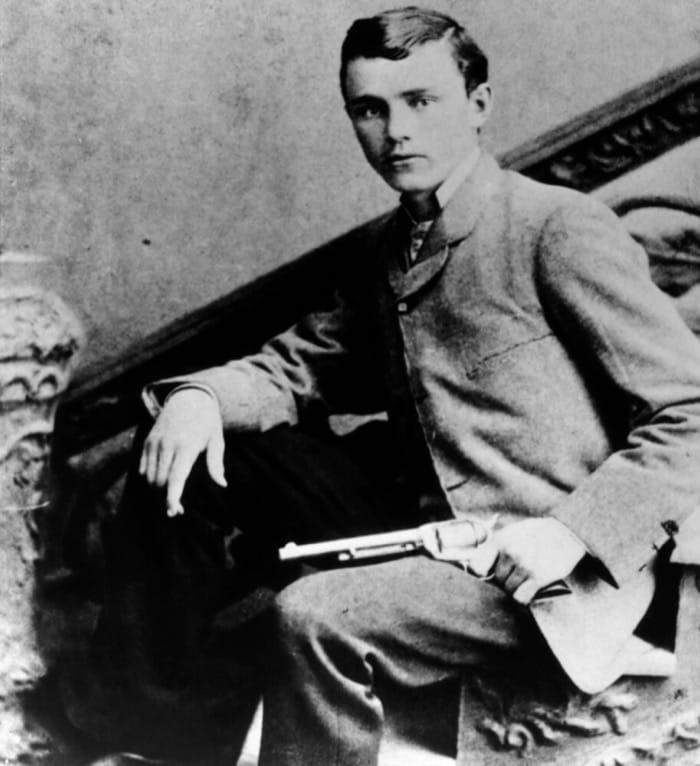
In the American Old West, Jesse James carved out a notorious reputation as a bank and train robber, most famously associated with the outlaw outfit known as the James-Younger gang.
Long before their criminal exploits across the Old West became the stuff of legend, Jesse James and his brother Frank fought on the side of the Confederate Army. Together, the James brothers rose to infamy as the masterminds behind the James-Younger gang, pulling off a string of daring bank and railway heists. It was gang member Robert Ford who gunned down Jesse James in 1882, an act that cemented Jesse's status as a legendary figure of the Old West.
Born on September 5, 1847, in Kearney, Missouri, Jesse Woodson James would grow into one of America's most iconic bandits, robbers, and mythical figures.
The James brothers — Jesse and Frank James — grew up well-educated in a prosperous farming household. Their father, Reverend Robert James, was a Baptist clergyman who had wed Zerelda Cole James and made the move from Kentucky to Missouri in 1842. During the summer of 1863, Union forces launched a brutal assault on the James family farm.
At just 16 years old, both Jesse and Frank threw in their lot with the Confederate guerilla army, riding alongside William Quantrill and "Bloody Bill" Anderson.
Whether Jesse and Frank were genuinely abusive toward Union soldiers remains a point of debate among historians. Some argue that the harsh treatment the brothers endured is what pushed them down the path of criminality. Regardless of the cause, they thumbed their noses at the draconian postwar civil legislation by effectively writing their own rules. Their targets — trains, stagecoaches, and banks — were owned or run by Northern institutions.
On the morning of April 3, 1882, just after breakfast, Jesse turned to straighten a picture hanging on the wall of his home. In that moment, Bob shot him in the back of the head, killing him instantly at the age of 34. The people of Missouri were outraged by the manner in which he was brought down, denouncing it as a cowardly killing.
Three months later, Frank turned himself in to Crittenden. When juries declined to convict him due to the scant evidence presented, Frank went on to live out the rest of his days in quiet obscurity.