
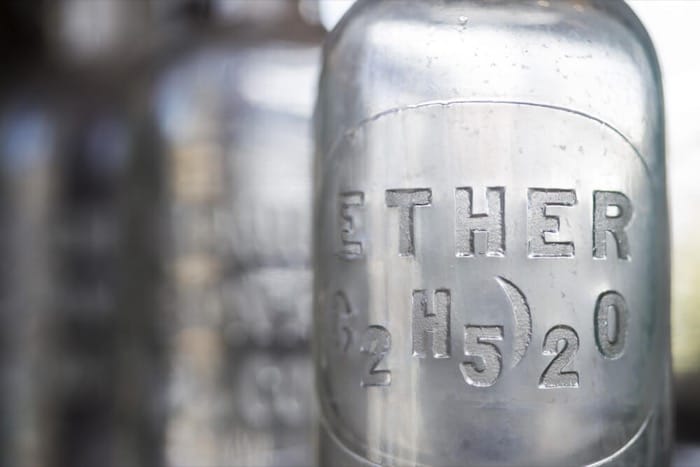
It was in 1846 that the medical world witnessed a groundbreaking moment — the very first clinical application of ether as a dental anesthetic. The procedure took place in Boston, with dentist William Morton serving as the surgeon who carried it out.
Years earlier, on March 30, 1842, Dr. Crawford Long had already employed ether while excising a tumor from the neck of a patient named James Venable. Though this marked Dr. Crawford's first known use of ether for anesthetic purposes, his knowledge of the substance likely traced back to his time at the University of Pennsylvania Medical School.
Experimenting with laughing gas as an anesthetic
Unlike many of his peers, William Morton never had the benefit of a formal dental education. He was, in fact, a pre-med student who had taken up an interest in dentistry while in Boston. Around 1845, he teamed up with Horace Wells, who served as both his mentor and partner, in an effort to harness the anesthetic potential of laughing gas nitrous oxide. Unfortunately, the demonstration they attempted ended in failure, partly due to an insufficient supply of gas among other issues.
Despite this setback, Morton refused to give up. He pivoted to experimenting with a different gas — ether. By this point, Wells had left Boston, and Morton found a new collaborator in Charles Jackson, who had previously been his pre-med tutor.
Morton began by testing the gas on animals before occasionally inhaling it himself at home. Eventually, he took the decisive step of administering ether as an anesthetic during an actual tooth extraction. The patient who underwent this historic procedure was Eben Frost, and it all happened right in Morton's dental office in Boston.
Following that landmark dental procedure, Morton continued to rely on ether in his surgical practice. Before long, ether's reputation as a powerful anesthetic spread rapidly through the medical community.