
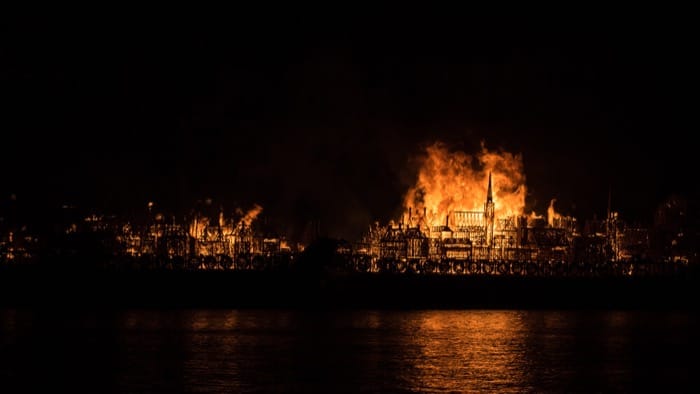
In 1666, a catastrophic blaze tore through London's streets with devastating force. The great fire of London laid waste to 13,200 houses along with 87 parish churches. Reports also indicate that St. Paul's Cathedral, the Royal Exchange, and the Guildhall were all consumed by the flames. Tragically, six people perished, leaving behind grieving families who were left to cope with both personal loss and widespread destruction.
How was London in 1666?
During the 1660s, the dangers of fire were poorly understood by the general population. This ignorance led people to construct their homes from timber and coat them with pitch — a substance that was highly flammable. Adding to the risk, roofs were thatched with little forethought, and buildings stood crammed tightly against one another.
At the time the fire broke out, London was a densely populated city. There were no cars or Lorries for transportation. Rather than living in proper houses, people resided in sheds within their yards. This style of housing across London was, in many ways, a disaster waiting to happen.
A severe drought had gripped London, creating serious water scarcity. The yards, filled with straw and flammable hay, provided easy fuel for the flames. On top of that, the prolonged dry conditions had parched the wooden buildings, causing them to ignite with alarming speed.
The Great Fire
The blaze ignited on Sunday, Sept 2, 1666, at a baker's shop on Pudding Lane owned by Thomas Farynor (Farriner). According to Farynor, he had put out the fire before going to bed, yet just three hours later, at 1 am, the entire premises had transformed into a roaring inferno.
Fires were hardly unusual in London, so residents initially paid little attention — until they witnessed how rapidly this one was spreading. The flames raced down Fish Hill and advanced toward the River Thames. Once they reached the Thames, the fire engulfed warehouses stocked with highly combustible materials like tallow and oil.
As luck would have it, the fire never managed to cross to the south side of the river. This was thanks to a major blaze back in 1633 that had already destroyed a section of the London Bridge.
Samuel Pepys Was the First to See the Fire
The fire was first spotted by Samuel Pepys, who served as a clerk to the Royal Navy. His recommendation was to deploy hooks as a means of halting the fire's advance. Sadly, these efforts proved futile, and the blaze raged on. Desperate residents resorted to burying their most valuable possessions within the burning structures. Pepys himself was no exception — he buried his prized cheese and wine underground.
How the Fire was Stopped
After consulting with the Navy, Pepys secured their agreement to demolish select buildings as a firebreak to prevent further spread. Gunpowder was used by the Navy to carry out these demolitions. Mercifully, the fire was brought under control by Wednesday, Sept 5, 1666. Even so, sporadic fires continued to flare up, and the scorched ground remained too hot for anyone to walk across.
London after the Fire
Much of London had to be rebuilt in the aftermath of the devastation. Temporary structures went up to shelter the displaced population. Unfortunately, many of those survivors fell ill and died during the winter that followed. In total, 13,200 houses and 87 parish churches had been destroyed. The Guildhall, St. Paul's Cathedral, and the Royal Exchange all fell victim to the inferno as well. There was, however, one silver lining — an enterprising businessman recognized an opportunity amid the chaos and established the first fire brigades to combat the flames.